
How to Choose the Right Radiant Barrier for Your Attic
Choosing the right radiant barrier for your Texas attic depends on your goals: maximum summer heat reduction, ease of installation, durability, moisture/ventilation concerns, and budget. All radiant barriers primarily work by reflecting radiant heat away from the hot roof deck, but they differ in construction, long-term performance in attics, and practical considerations.
Key Requirement: Radiant barriers need an air space of at least 1 inch (created by allowing the material to droop between rafters) on the reflective side to function effectively. Without this air space, reflective performance drops significantly, as emphasized by the U.S. Department of Energy.
Main Types of Radiant Barriers for Attics

- Foil/Foil (Solid Sheet Radiant Barrier – Single or Double-Sided) Pure aluminum foil laminated to a lightweight substrate (often kraft paper or scrim for strength), or double-sided foil.
- Pros: Highest reflectivity when clean; lightweight and easy to staple; perforated options allow vapor permeability and attic ventilation; minimal dust impact if installed foil-face down.
- Cons: No added thermal resistance from bubbles; can tear without reinforcement (choose reinforced versions).
- Best for: Attics prioritizing maximum radiant heat reflection and good airflow (common in ventilated Texas attics). Many sources, including DOE-aligned guides, note little performance difference between single-sided and double-sided foil—the first foil layer does most of the work. Often preferred for residential attics due to breathability and lower long-term dust/moisture issues.
- Foil/Bubble (Single Bubble or Double Bubble Reflective Insulation) Foil on one or both sides with one or two layers of polyethylene bubbles.
- Pros: Bubbles provide minor thermal spacing and added tear resistance/strength; easier handling in some cases.
- Cons: Bubbles add only slight effective R-value (often ≤ R-2 in assemblies); non-perforated versions may trap moisture or reduce ventilation; dust can settle in pockets, reducing long-term performance in dusty attics; durability concerns in extreme Texas heat/UV over time.
- Best for: Applications needing extra strength (e.g., garages, metal buildings) more than open, ventilated attics.
Single vs Double Bubble
Single bubble: Thinner, lighter, more economical—sufficient for basic radiant reflection.
Double bubble: Slightly more strength and spacing, often for larger installs. However, radiant performance differences are modest—the foil layers do the primary heat reflection work.
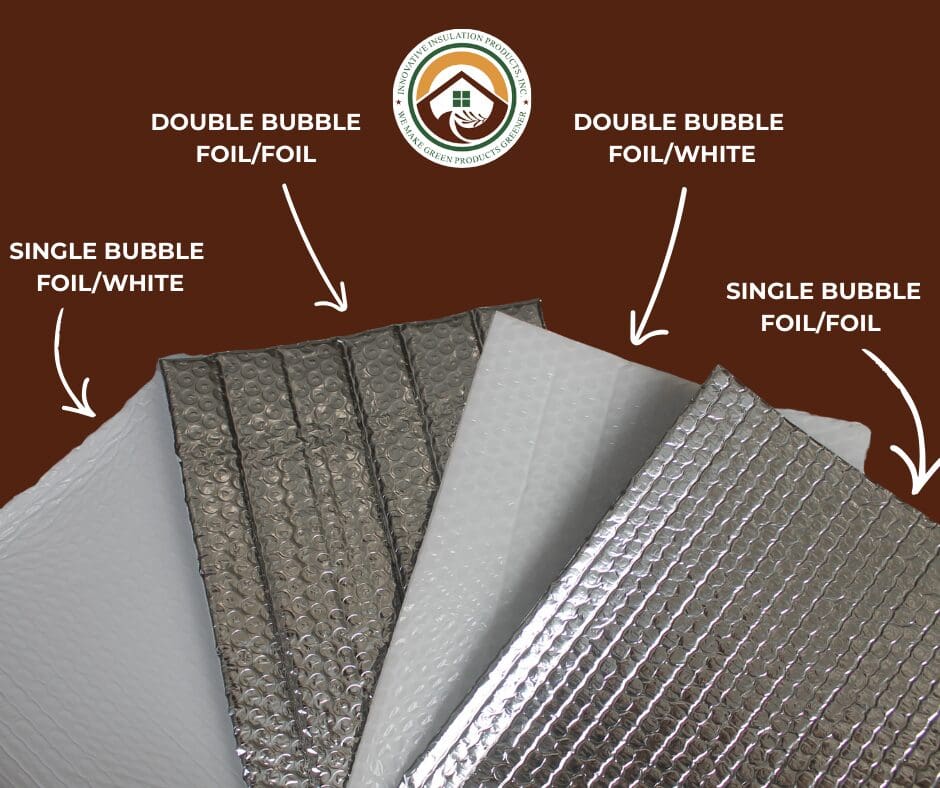
Comparison Table: Quick Guide for Attic Use in Texas Hot Climate
| Type | Radiant Reflection | Added Thermal Resistance | Weight/ Handling | Dust & Moisture Concerns | Best Attic Fit (Texas) | Typical Cost |
| Foil/Foil (Solid Sheet) | Excellent (high) | None/ minimal | Very lightweight | Low if foil-face down; breathable options | High – ventilated attics, max heat block | Lower |
| Single Bubble Foil | Good | Slight (bubble spacing) | Light | Higher dust in pockets; potential moisture trap | Medium – if strength needed | Medium |
| Double Bubble Foil | Good | Slightly more than single | Light | Higher dust/moisture risk | Medium – larger areas or added durability | Higher |
How to Choose the Right Option for Your Attic
- Prioritize maximum radiant heat reduction → Choose foil/foil (solid sheet, preferably perforated for vapor concerns). It’s often the most effective and cost-efficient for attics per building science and DOE sources.
- Need extra tear resistance or minor cushioning → Opt for single or double bubble foil—but ensure perforated/breathable versions for attics to avoid moisture trapping.
- Budget and simplicity → Foil/foil single-sided is usually sufficient and more affordable.
- Attic specifics → Ventilated attic with open rafters? Foil/foil excels. Dusty or low-ventilation? Avoid non-breathable bubble types.
- Always combine with air sealing, adequate attic ventilation, and bulk insulation (R-38+ recommended in Texas) for best results—radiant barriers complement, not replace, traditional insulation.
Installation Reminder
Staple to rafters with the reflective side facing down toward an air space (droop for ≥1 inch gap). Keep vents clear. Avoid direct contact with wiring or heat sources.
Safety Note
Reflective foils can conduct electricity—avoid contact with exposed wiring. Follow manufacturer instructions, local fire/building codes, and maintain clearances around recessed lights, flues, chimneys, etc.
Why Consider Our Products?
At Innovative Insulation Products, Inc. (IIP Texas), we manufacture durable foil/foil and bubble radiant barriers tailored for Texas attics—lightweight, high-reflectivity, and Made in the USA. Request free samples to compare in your space: visit iiptexas.com/contact or reach out. We’re here to help guide your choice!
References (accessed January 2026)
- U.S. Department of Energy. Radiant Barriers. https://www.energy.gov/energysaver/radiant-barriers
- Building America Solution Center. Attic Radiant Barriers. https://basc.pnnl.gov/resource-guides/attic-radiant-barriers